
The Why Inc.Est. 2006

Embedded leadership & transformation — operating since 2006

Make stuck systems move.

Some organizations are stuck because the mission and the daily operation have quietly stopped agreeing with each other. Others just need something that doesn't exist yet — a program, a partnership, a way of reaching the people they're meant to serve. The Why Inc. does both: find what's wrong, build what's missing, and stay until it's working on its own.

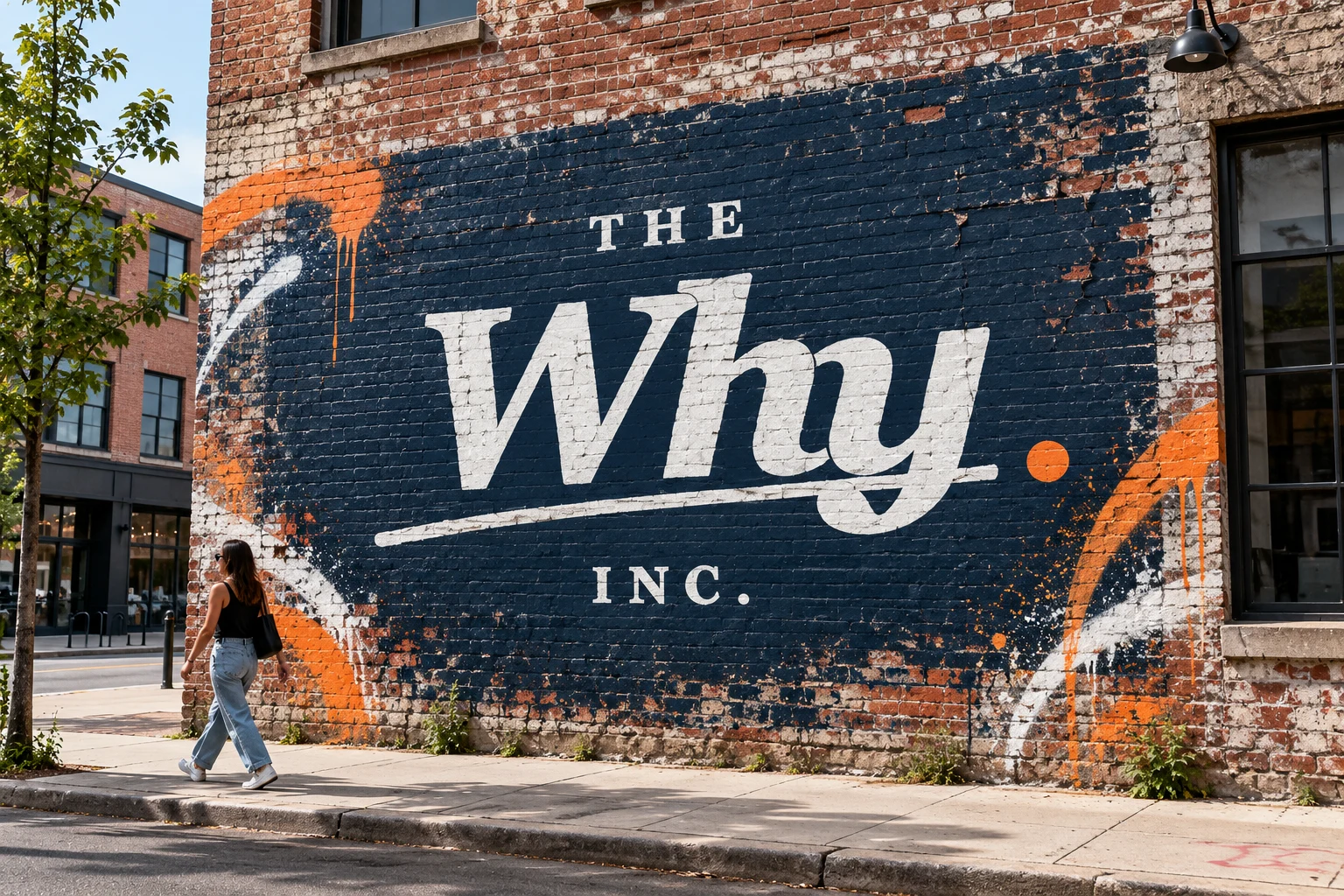
“The Why Inc.” wordmark painted navy and orange on a brick wall, with a passerby walking past.

Somebody already painted it on a wall.

WHY

Not a tagline. The starting question.

Purpose without execution is branding. Execution without purpose is machinery.

Everything here starts by answering it.

2006
Running The Why Inc. alongside every executive role since
$21M
Regional workforce system led as Chief Program Officer
800+
People served annually across the workforce & youth programs he's built
38%
Reduction in recidivism from the reentry strategy he integrated

What's usually going on

Start with the symptom. Find what keeps producing it.

Not because anyone failed. Because the system stopped matching what it was built to do.

The strategic plan is a document, not a system

It got ratified, printed, and shelved. Nobody runs the organization by it day to day.

The board sees the decline. Naming it is the hard part

Not the evidence — the politics of saying it out loud in that room.

Programs are built around funding, not outcomes

The grant shaped the program. The people it's supposed to serve came second.

Staff carry responsibility without authority

They're blamed for outcomes they were never given the power to control.

Three ways in

Pick the door that matches what's actually stuck.

Lead through change

Fractional leadership, transitions, and the governance work that lets a board or executive team move.

Build what's missing

Programs, partnerships, workforce pathways, revenue models, and the narrative systems that carry them.

Make improvement last

Staff development and the practical AI that keeps an organization's own knowledge working after the engagement ends.

See all eight, grouped under those three

Selected roles & projects

What this has looked like.

Regional workforce system leadership

SCPA Works

Led a $21M regional workforce system as Chief Program Officer — 12 departments, 8 locations, a 320-person partner network — and helped integrate the reentry strategy behind a 38% drop in recidivism.

Read the case study

Economic opportunity & workforce pipeline

Crispus Attucks Center

Built the partnerships and funding behind education, workforce, and entrepreneurship programs serving 800+ people a year, including Seed Catalyst, a micro-investment platform that helped launch 32 businesses.

Read the case study

Inclusive workforce design

Starbucks Inclusion Academy

Wrote and delivered the curriculum for a 12-week hiring pathway for adults with disabilities — later adopted across additional facilities.

Read the case study

Association governance & advocacy

Pennsylvania Chiropractic Association

Reversed a decade of financial decline, grew corporate partnership revenue 40%+, and got bipartisan legislation through the PA House 193–8.

Read the case study

Industry validation & content infrastructure

Spinal Chat

A turnkey, science-based podcast explaining chiropractic's efficacy to patients — built so members can embed it in their own social media. 53 episodes across two seasons, reaching listeners in 18 countries.

Read the case study

See all case studies

What's different about how this ends

Most consultants leave a report. This leaves a system your own people can run.

Where the work includes AI-enabled design, the deliverable isn't a one-time recommendation. It's a tool built with your own people, piloted and measured before it's trusted, handed over with the knowledge to run and extend it — and a continuing relationship for the tuning that comes after.

Read how that works

A shared decision, not a sales pitch

This works best with leaders who want the real picture — and are ready to act on it.

Good fit when

  • Leadership is willing to look at uncomfortable evidence.
  • There's real access to the people and systems involved.
  • The organization wants to pilot and measure, not commission another study.
  • Someone with real authority is sponsoring the work.

Not yet, if

  • The goal is to confirm a decision that's already been made.
  • The ask is cosmetic branding over an operational problem.
  • There's no one with the authority to change anything.

Somebody already painted it on a wall

The question doesn't need an office to live in.

It shows up wherever people stop pretending they already know the answer.

Tell us what's going on. We'll tell you if we're the right partner for it.

Start a conversation